


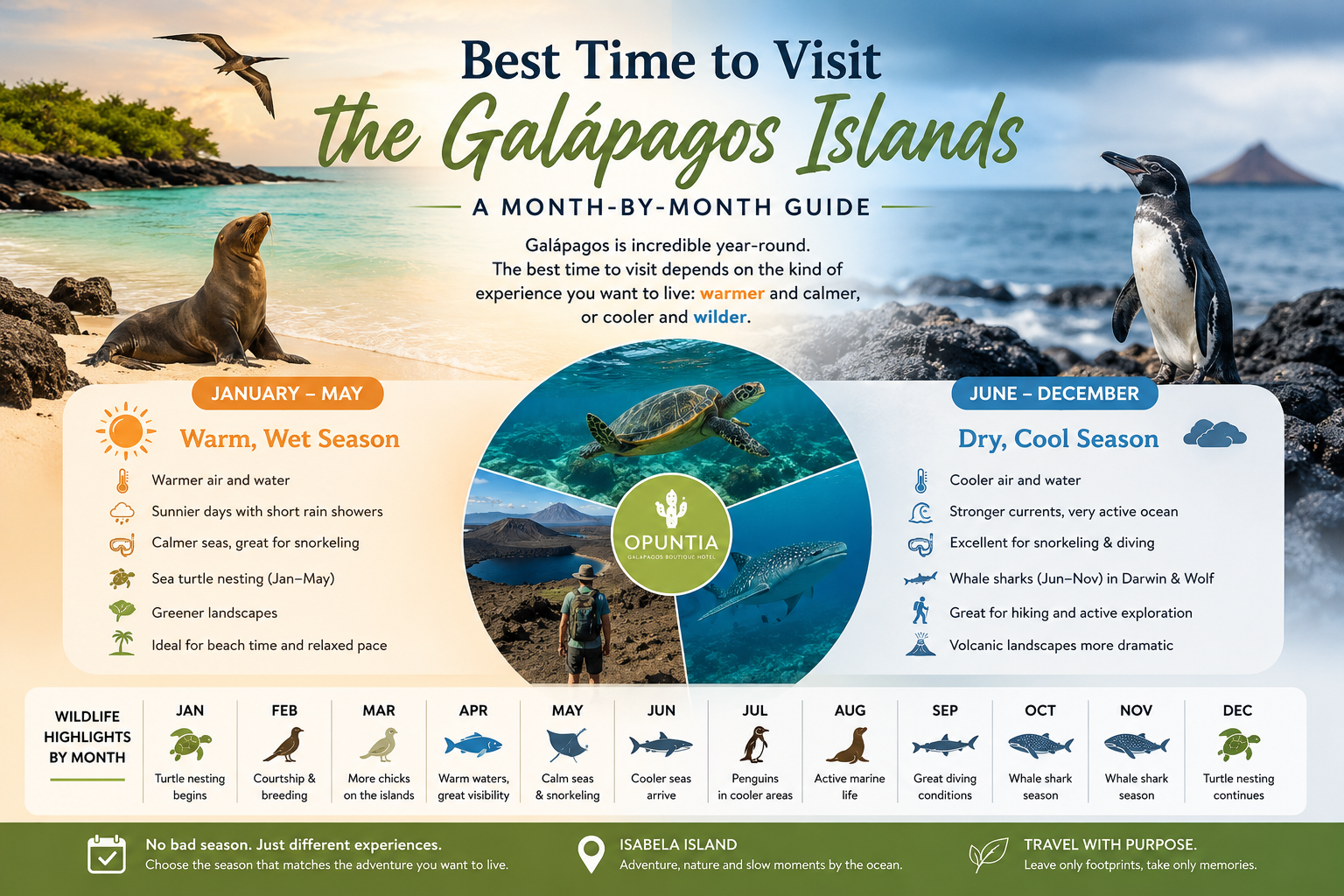
The best time to visit the Galápagos Islands depends less on finding a “perfect” month and more on understanding what kind of journey you want to experience. In Galápagos, there is no truly bad season. The islands are alive year-round, with wildlife encounters, volcanic landscapes, marine life, beaches, snorkeling sites, and quiet moments of connection always present in different ways.
What changes from month to month is the rhythm of the islands: the ocean temperature, the visibility underwater, the activity of certain species, and the feeling of each landscape. Some travelers prefer warmer weather and calmer seas. Others come for cooler temperatures, dramatic marine encounters, and active wildlife.
For land-based travelers, choosing the right season can also help shape a more intentional stay. Whether you want to snorkel, hike Sierra Negra, explore Isabela by bike, or simply slow down by the ocean, knowing the Galápagos seasons allows you to travel with more purpose.
The Two Seasons: What They Actually Mean
Galápagos has two main travel seasons: the warm season and the dry season. The warm season usually runs from January to May, while the dry season generally extends from June to December. These patterns are influenced by ocean currents, especially the warmer Panama Current and the cooler Humboldt Current.
The important thing to understand is that both seasons are worth visiting. The warm season often brings sunnier days, warmer water, and a more tropical feeling. The dry season brings cooler air, cooler water, stronger currents, and excellent conditions for marine wildlife activity.
Instead of asking only “What is the best month to visit Galápagos?”, it may be more useful to ask: What do I want to feel, see, and do during my trip?
June–December: The Dry, Cool Season
The dry season is often considered one of the best times to visit the Galápagos Islands for travelers interested in snorkeling, wildlife, and active exploration. From June to December, temperatures are cooler, skies may be cloudier, and the sea can feel colder, especially compared to the first months of the year.
This season is strongly connected to the Humboldt Current, which brings colder, nutrient-rich water into the archipelago. These nutrients support marine life, making the ocean especially active during this time. It is a great period for travelers who want to experience the wilder, more energetic side of Galápagos.
For snorkeling and diving, the dry season can be incredibly rewarding. Wildlife sightings may include sea lions, rays, sea turtles, marine iguanas, penguins, and many fish species. In the far northern islands, Darwin and Wolf are especially known for major shark activity and whale shark encounters between June and November.
On land, this is also a comfortable time for hiking. The cooler temperatures can make excursions such as Sierra Negra Volcano on Isabela feel more manageable. Trails may be drier, and the landscape reveals a more volcanic, textured side of the islands.
For travelers staying on Isabela, the dry season is ideal for combining adventure and rest: morning hikes, snorkeling excursions, beach walks, and slow afternoons by the ocean. It is also a good season for travelers who want a more active itinerary without the intense heat of the warm months.
January–May: The Warm, Wet Season
The warm season, from January to May, brings warmer air, warmer water, and sunnier days. Short rain showers may appear, especially in the afternoon, but they often pass quickly. This season can feel softer and more tropical, making it a favorite for travelers who want beach time, calm snorkeling, and a more relaxed pace.
The warmer ocean can be more comfortable for swimming and snorkeling. Visibility is often clear, and the sea may be calmer, especially compared to the stronger currents of the dry season. For first-time visitors or families, this can be a beautiful time to enjoy the water without rushing.
Wildlife is also highly active during these months. Sea turtle nesting in Galápagos is closely associated with the first part of the year, with monitoring efforts often focused between January and May. Land birds, marine birds, and reptiles are also active in different parts of the archipelago during this time.
The landscapes can look greener during the warm season, especially in the highlands. For travelers who love photography, color, and softer light, these months can be especially beautiful.
This season is ideal for travelers who want warmth, calmer ocean conditions, relaxed beach moments, and a slower rhythm between excursions.
Wildlife Highlights by Month
Galápagos is not a destination where wildlife appears only in one season. However, each month offers different natural moments.
January to March is warm, sunny, and active. This is a beautiful time for beach days, snorkeling, and observing the beginning of many reproductive cycles. Green sea turtles are especially important during this period, as nesting activity begins on key beaches in the archipelago.
April and May are often considered excellent months for travelers looking for balance. The water is still warm, visibility can be good, and the weather remains pleasant. These months are ideal for travelers who want a mix of snorkeling, land exploration, and calm boutique-style stays.
June to August marks the arrival of the cooler dry season. The ocean becomes more dynamic, currents grow stronger, and marine wildlife becomes more active. This is a great period for travelers who want snorkeling, hiking, and a more adventurous atmosphere.
September to November can bring cooler waters and stronger marine conditions, but also some of the most exciting wildlife encounters. For experienced divers, this period is strongly associated with whale shark season around Darwin and Wolf, while Isabela remains a wonderful base for volcanic landscapes, penguins, marine iguanas, and coastal exploration.
December is a transition month. Warmth begins to return, seas may become calmer, and the islands start moving toward the sunny, tropical feeling of the warm season.
Best Time for Specific Activities
For snorkeling, the warm season is more comfortable because the water is warmer. However, the dry season often brings more marine activity. If you are sensitive to cold water, January to May may feel better. If you are focused on wildlife encounters, June to November can be very rewarding.
For hiking Sierra Negra Volcano, June to August is often a strong choice because cooler temperatures can make the trail more comfortable. This is especially useful for travelers who want to explore Isabela actively while still enjoying a relaxed stay near the beach.
For sea turtle encounters, Galápagos offers chances to observe turtles in the water throughout the year, but nesting activity is especially important in the first months of the year. The key is always respectful observation: keep your distance, never touch wildlife, and follow your guide’s instructions.
For families, the warm season can be easier because of calmer seas and warmer water. For more active travelers, the dry season offers stronger nature experiences, especially for snorkeling and hiking.
For land-based boutique stays, both seasons work beautifully. A hotel stay allows you to move at your own rhythm: one day of exploration, one day of rest, one morning by the ocean, one afternoon discovering town life. This flexibility is one of the best ways to experience Galápagos with purpose.
Choosing Your Best Time to Visit
The best month to visit Galápagos is the one that matches your travel intention.
Choose January to May if you want warmer water, sunny days, calmer snorkeling, greener landscapes, and a softer island rhythm.
Choose June to December if you want cooler temperatures, stronger marine wildlife activity, better hiking conditions, and a more adventurous feeling.
Choose April, May, June, or November if you want a balanced experience with fewer crowds, strong wildlife opportunities, and comfortable conditions.
For travelers staying with Opuntia Hotels, the journey can be shaped around both comfort and connection. With properties in San Cristóbal and Isabela, the experience allows guests to stay close to beaches, piers, town centers, and key island attractions while keeping a calm, land-based rhythm.
More than choosing the “perfect” date, visiting Galápagos is about arriving with awareness. Every season invites you to observe differently, move respectfully, and understand that the islands are not just a destination. They are a living ecosystem.
When you travel with purpose, timing becomes more than logistics. It becomes part of how you connect with the place.
Frequently Asked Questions
What is the best time of year to visit the Galápagos Islands?
Any month works. The Galápagos does not have a bad season. June to December offers cooler temperatures, active marine wildlife, and excellent snorkeling opportunities. January to May brings warmer water, sunnier days, calmer seas, and a softer tropical feeling. The best time depends on whether you prefer adventure, comfort, wildlife, or beach time.
What is the Galápagos dry season like?
The dry season runs roughly from June to December. It is cooler, drier, and influenced by stronger ocean currents. This brings more nutrients into the water, which can attract more marine wildlife. It is a great season for snorkeling, hiking Sierra Negra, seeing penguins around Isabela, and exploring the islands with a more active rhythm.
When is the cheapest time to visit the Galápagos?
Prices vary more by availability than by season. The lowest-friction months tend to be September to October and April to May, outside major holiday periods. Booking directly with land-based hotels can often help travelers find better value, clearer communication, and more flexible options throughout the year.
Is there a best time to visit Isabela specifically?
Yes. The dry season, especially June to November, is ideal for Isabela if you want volcanic hikes, marine wildlife, and active exploration. Sierra Negra is often clearer and more comfortable in the cooler months. Flamingos can be seen in wetlands, and the island is excellent for snorkeling, biking, beach walks, and slow travel year-round.